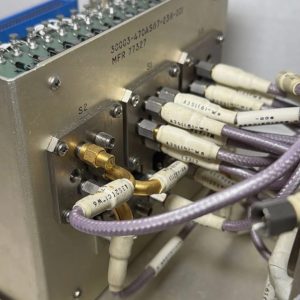
The Aviation Switching Module – NSN 4920-01-250-2696 (AS-IS / Untested) provides aviation maintenance organizations, military-surplus buyers, aerospace technicians, equipment restorers, and collectors with access to a catalog-identified switching component whose operational status has not been confirmed.
An Aircraft Switching Module may control, route, select, isolate, or distribute compatible electrical signals or circuits, while an Aerospace Switching Module should be evaluated according to its exact internal design and intended equipment relationship.
Whether buyers search for an Aircraft Electrical Switching Module, Aviation Electrical Control Module, Aircraft Power Switching Module, Aerospace Electrical Control Unit, or Aircraft Signal Switching Module, technical identification should guide the purchase.
Accurate use of Aviation Control Module, Aircraft Electronic Switching System, Aerospace Switching Unit, and Aircraft Electrical Module terminology improves SEO without creating unsupported functional claims.
Identifying the Aerospace Switching Unit
NSN 4920-01-250-2696 should be compared with the data plate, manufacturer number, contract markings, serial number, connector layout, and available documentation on the actual unit.
Complete identification increases the value of the Aviation Switching Module for restoration, research, inventory management, or component evaluation.
Understanding AS-IS and Untested Condition
The buyer should plan for professional inspection, troubleshooting, repair, parts replacement, or display-only use.
Improper voltage, polarity, grounding, current, signal input, or connector pin assignment can damage the module and connected equipment.
Evaluating Aircraft Switching Functions
The actual role depends on internal circuitry, switch configuration, connector pinout, associated system design, and technical documentation.
External controls may include switches, selectors, indicators, circuit positions, covers, labels, or connection ports depending on the exact configuration.
Aerospace Switching Module Construction
An Aerospace Switching Module may use a durable enclosure, secure connectors, internal wiring, switches, relays, terminal assemblies, circuit boards, or other configuration-specific components.
Connector damage can prevent proper mating or create electrical shorts even when the module enclosure remains intact.
Evaluating Aircraft Electrical Components
External condition cannot confirm the state of hidden relays, contacts, circuit boards, wiring, or internal components.
If the enclosure is opened for professional inspection, the process should be documented with photographs and organized hardware control.
Maintaining Electrical Control Equipment
An Aviation Electrical Control Module can coordinate or select electrical functions within a compatible aviation or support-equipment system, depending on its documented design.
High-resolution photographs can preserve readable details before cleaning or restoration.
Aviation Power Circuit Management
Power switching equipment can create heat, arcing, or equipment damage when connected incorrectly.
Missing covers or barriers may expose conductive points and increase handling risk.
Electrical Control Unit Restoration
An Aerospace Electrical Control Unit may combine switching, control, indication, interface, or distribution functions within one enclosed assembly.
Every repair should be photographed and recorded if the click here module is restored.
Signal Switching Module Inspection
An Aircraft Signal Switching Module may route low-level, control, communication, measurement, or test signals between compatible equipment channels.
Shielding, grounding straps, connector shells, cable clamps, and enclosure bonding can influence signal performance where included in the original design.
Choosing an Aviation Control Module
Associated wiring, power supplies, interfaces, switches, displays, sensors, test sets, or aircraft equipment may be required for meaningful operation.
Every marking should be recorded before purchase or installation planning.
Aircraft Test and Support Equipment
A complete but untested unit may have different value from an incomplete component known to contain damage.
Technical schools may use a de-energized module to demonstrate connector inspection, switch construction, equipment identification, documentation research, or safe troubleshooting planning.
Choosing an Aerospace Power Distribution Module
Professional evaluation helps determine whether the unit serves a power-distribution role or another specialized function.
Additional mounting holes should not be drilled until the component application is established.
Choosing an Aircraft Electrical Control Unit
An Aircraft Electrical Control Unit should receive an organized inspection covering identification, enclosure condition, connectors, controls, labels, hardware, internal components, and signs of environmental exposure.
Continuity measurements, insulation checks, contact-resistance testing, and component examination may be appropriate when performed by qualified personnel.
Inspecting a Power Control Module
Responsible product information protects buyers seeking an Aviation Power Control Module.
Technicians should inspect for capacitors, transformers, relays, damaged insulation, or hazardous residues before opening or testing the unit.
Understanding an Aircraft Electronic Switching System
A systems approach supports more accurate troubleshooting and restoration.
Intermittent switching problems can result from worn contacts, damaged connectors, corrosion, weak relays, cracked solder joints, unstable power, or harness faults.
Aerospace Switching Unit Storage and Handling
Desiccant or moisture-control materials should not contact electrical components directly unless appropriate.
Insured and trackable transportation supports responsible sales of specialized aviation hardware.
Aircraft Electrical Module Buying Considerations
A buyer seeking an operational replacement has different needs from a collector, technical school, parts dealer, or restoration specialist.
Unknown information should remain clearly identified as unknown.
Evaluating an AS-IS Aircraft Switching Unit
The AS-IS and untested condition should appear clearly within the title, description, invoice, and transaction terms.
- Determine whether cables, plugs, manuals, test leads, mounting hardware, storage cases, or companion components are included.
- Arrange qualified technical evaluation whenever condition, internal status, or testing requirements remain uncertain.
- Retain purchase records, photographs, labels, research, testing notes, and repair documentation with the module.
Professional Bench Evaluation
Testing should begin with identification research, visual inspection, connector mapping, safety review, and examination of available technical documentation.
Powered testing should proceed gradually while monitoring current, temperature, smell, noise, indicators, and unexpected behavior.
Repairing Legacy Aviation Control Hardware
Professional restoration can improve the usability and value of the Aerospace Switching Module.
Accurate records support future maintenance and responsible resale.
Selecting a Surplus Aerospace Switching Unit
For the right purchaser, the unit can offer a useful foundation for technical research, controlled troubleshooting, component recovery, or legacy-equipment restoration.
The strongest buying decision begins with confirming the NSN, manufacturer, part number, serial number, configuration, connector layout, condition, storage history, modification status, included equipment, and intended use.
Whether the product is described as an Aircraft Switching Unit, Aerospace Power Distribution Module, Aircraft Electrical Control Unit, or Aviation Power Control Module, AS-IS limitations should remain clear.
With responsible purchasing, NSN research, connector protection, current-limited evaluation, and documented restoration, the component can remain a useful aviation asset.